
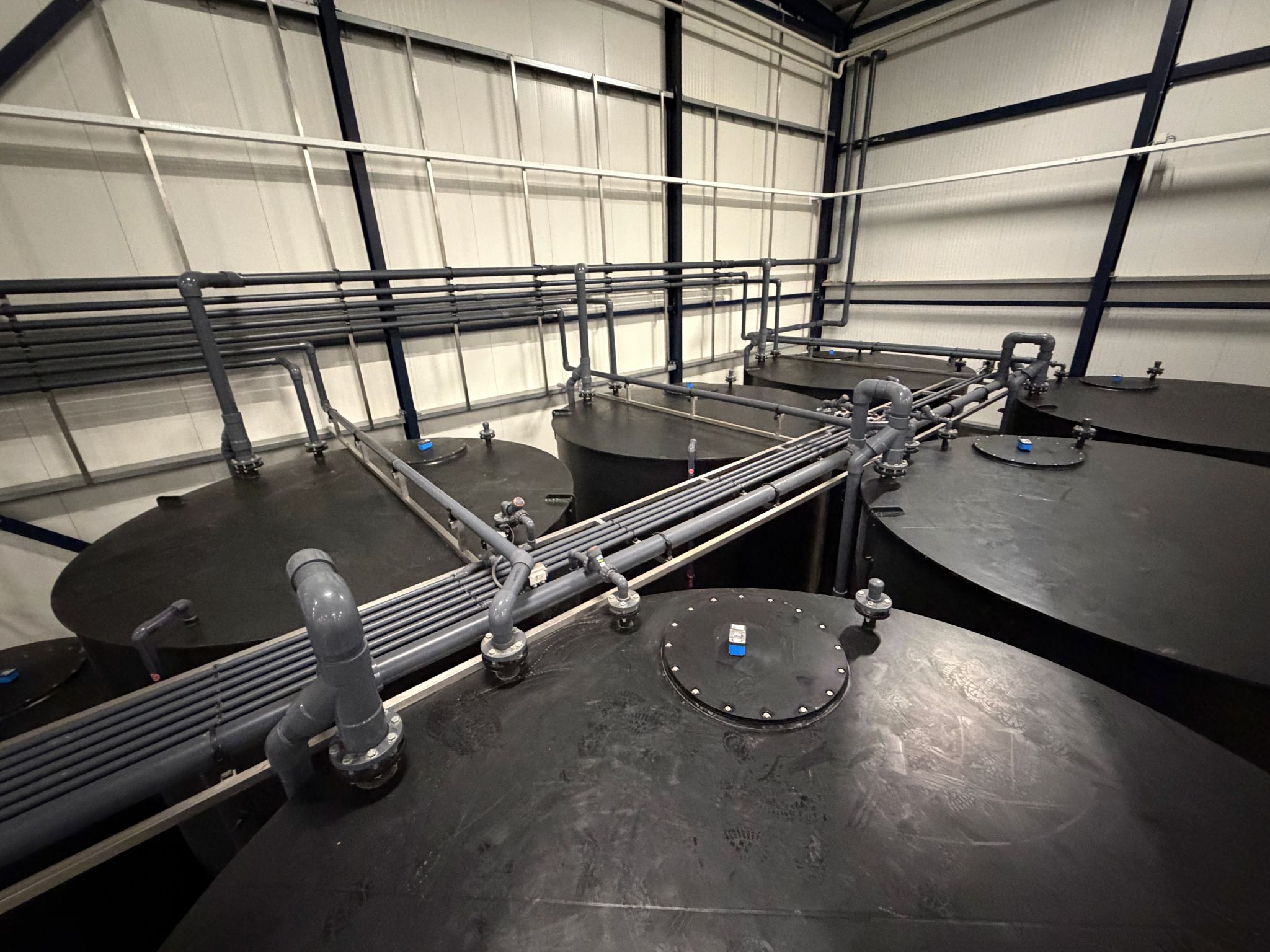
Wireless radar sensors replaced manual checks and unreliable float systems, giving one of the Netherlands’ leading pepper growers full visibility into tank levels across the operation.
For greenhouse growers managing large-scale nutrient supply, reliable tank monitoring is not a luxury. It directly affects delivery planning, crop quality, and day-to-day efficiency. Hoogweg Paprikakwekerijen, a prominent Dutch pepper grower, found that manual tank checks and mechanical float systems were no longer providing the visibility the operation required. By working with Staal Instruments, Hoogweg replaced its outdated process with wireless radar level sensors across all 47 fertilizer and urea tanks, installed in just one day, with no modifications to the tanks and no disruption to operations.
The challenge: manual monitoring and unreliable float systems
Before the project, operators at Hoogweg had to physically check tank levels across the facility. This was a time-consuming routine that could easily take several hours per week, with no guarantee that the readings were accurate or up to date.
The mechanical float systems in the tanks added further uncertainty. Floats would occasionally become stuck, producing readings that no longer reflected actual levels. For an operation that depends on timely fertilizer deliveries and precise nutrient dosing, this meant working with incomplete and sometimes misleading information.
Hoogweg needed a solution that could answer two simple but critical questions at any given moment: is a tank running low, and is there enough available capacity to receive a new delivery?
The solution: fast installation of wireless radar sensors
Staal Instruments equipped all 47 fertilizer and urea tanks with wireless radar level sensors. The entire installation was completed in a single day. Because the sensors measure through the walls of the plastic tanks, no drilling, cutting, or tank modifications were needed. The process required no downtime and no disruption to the growing operation.
This ease of deployment is central to the Staal Instruments approach: “Insight. Because our sensors can be installed almost anywhere with minimal effort, we are able to provide clear insight into what is really happening inside your assets.”
Once installed, the sensors connect wirelessly to the Staal Instruments cloud platform, where the team at Hoogweg can monitor all 47 tanks in real time from a single dashboard.
The impact: real-time insight and improved operational efficiency
The shift from manual checks to continuous monitoring has had a direct impact on how Hoogweg manages its fertilizer supply.
The grower now has real-time visibility into every tank across the operation. Custom notifications alert the team when a tank drops below a set threshold, and equally important, when sufficient volume becomes available to schedule a new delivery. This removes the guesswork from logistics planning and allows the company to coordinate supplier deliveries with greater precision.
The hours previously spent on manual walk-throughs are now freed up for higher-value tasks. The risk of unexpectedly running empty has been significantly reduced, and operators no longer need to rely on float systems that may or may not be giving accurate readings. In practical terms, the operation runs more smoothly, with fewer surprises and better planning reliability.
What Hoogweg says
“We used to quite some time every week walking the greenhouse to check the tanks. Now we get a notification when a tank needs attention and we know exactly when we can schedule the next delivery. It has made our planning much more reliable and freed up time for the team to focus on the crop.”
Erik Hoogweg, from Hoogweg Paprikakwekerijen
A practical model for greenhouse horticulture
The Hoogweg project demonstrates how quickly wireless radar monitoring can transform tank management in greenhouse horticulture. With fast installation, no modifications to existing infrastructure, and immediate real-time insight, the barrier to upgrading from manual processes is low while the operational benefits are significant.
For growers still relying on manual checks or mechanical float systems, the case is clear: better data leads to better decisions, fewer disruptions, and more time spent on what matters most, growing a quality crop.
Ready to improve your tank monitoring?
Staal Instruments helps growers and industrial operators gain real-time insight into tank levels with minimal effort. Whether you manage a handful of tanks or hundreds, our wireless radar sensors can be installed quickly, without modifications to your existing infrastructure.
Get in touch to find out how radar level monitoring can work for your operation.